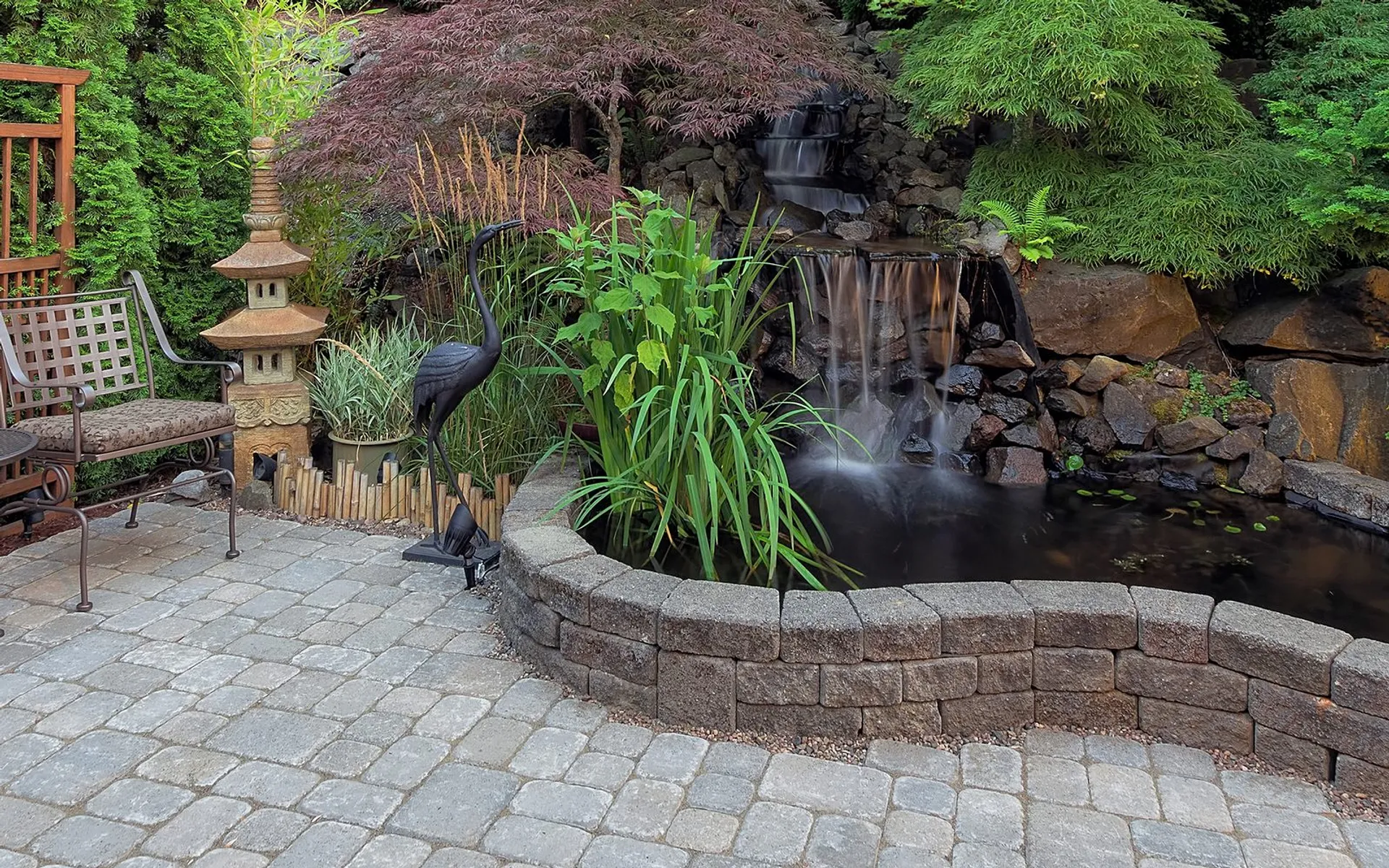
Tarpon Springs gives us two of the county’s most interesting canvases: bayou-front lots where the yard slopes to brackish water, and a historic district where a landscape has to look like it belongs to a hundred-year-old house.
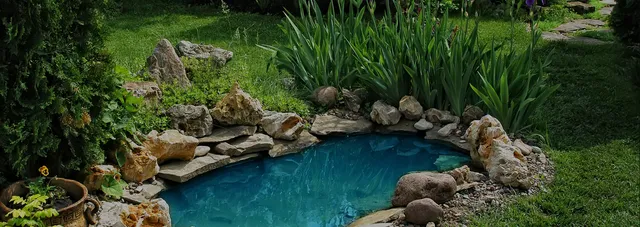
Waterfront properties on Whitcomb Bayou and around Pointe Alexis need salt- and flood-tolerant planting at the low end, erosion-conscious grading, and hardscape that handles storm surge with grace. We stage plant palettes by elevation — the species list ten feet from the water is different from the one at the front door.
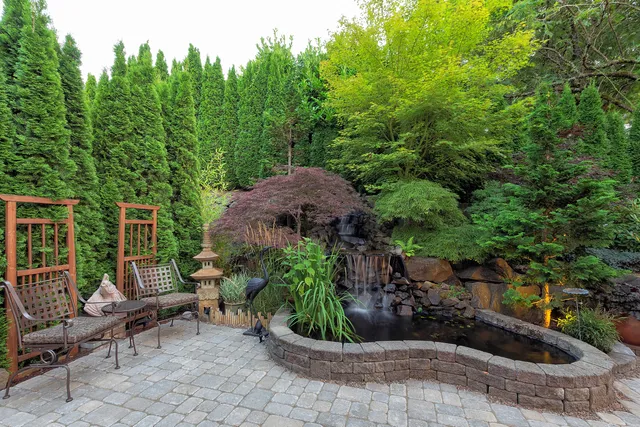
In the historic district, the town’s Greek heritage shows up in what people ask for: courtyard gardens, gravel and paver terraces, citrus and herbs, bougainvillea on real structure. It’s a Mediterranean vocabulary that happens to suit the Gulf Coast climate beautifully, and we’re glad to design in it.
What we build most in Tarpon Springs
Courtyard gardens in the historic district — gravel terraces, citrus, bougainvillea on real structure, a fountain doing the talking. Bayou-front terraces and erosion planting on Whitcomb Bayou and Pointe Alexis, staged by elevation. And material-honest refreshes for old-house streetscapes: shell, clay tones, weathered stone.
The Tarpon Springs yard, decoded
- Soil: sandy upland; organic muck near the bayous — two different foundations, handled two different ways.
- Salt: brackish exposure on the bayou lots; the waterline plant band is its own discipline.
- Elevation: bayou yards drop toward the water — grading and storm-water routing are part of every design, not an add-on.
- Water: city schedule; established natives on the slopes barely need it.
- Local quirk: the Greek heritage is a living design language here — Mediterranean courtyards aren’t a theme, they’re the neighborhood vernacular, and the climate agrees with them.
Neighborhoods we know well
- Historic District
- Whitcomb Bayou
- Pointe Alexis
- Lake Tarpon area