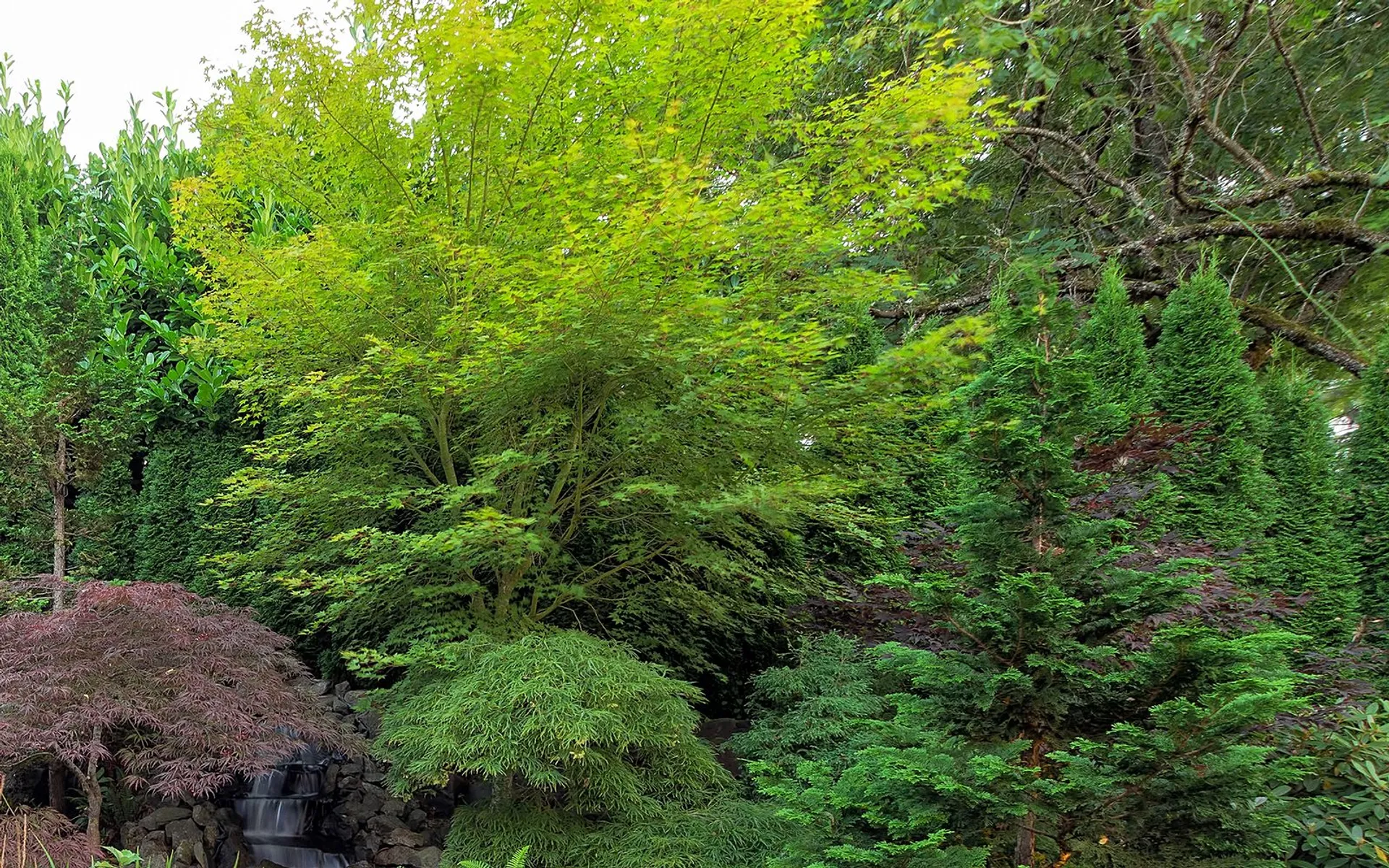
Safety Harbor’s grand oaks are the whole point of living here — and the central design problem of every yard. Turf under deep canopy is a losing bet, so we build shade gardens instead: ferns, caladiums, bromeliads, and groundcovers that make “can’t grow grass there” into the best-looking part of the property.
Hardscape near mature oaks demands root-aware construction. We route paths and patios around structural roots, use permeable bases where the drip line demands it, and never trench irrigation through a root plate to save an hour. The trees were here first; a patio that kills one is a failed project.
Around the downtown blocks and Philippe Park corridor, homeowners tend to want outdoor rooms that match the town’s slow-porch character — brick or tumbled-paver terraces, low seat walls, warm lighting up in the canopy. That’s exactly the kind of project we like to build.
What we build most in Safety Harbor
Shade gardens are the headline — converting can’t-grow-grass zones under the oaks into the best part of the property. With them come root-aware paths and terraces that thread through the canopy without harming it, and up-lighting programs that turn hundred-year-old oaks into nighttime architecture.
The Safety Harbor yard, decoded
- Soil: richer than the county norm — decades of oak leaf litter build real topsoil under the canopy.
- Salt: low; the east-facing bay edge gets a mild dose.
- Canopy: dominant. Root zones decide where hardscape goes; sun pockets are precious and get spent deliberately.
- Water: shade slashes evaporation — established shade beds want a fraction of a lawn’s water.
- Local quirk: the trees are the town’s identity. A project that costs an oak its health is a failed project here, whatever it looks like on day one.
Neighborhoods we know well
- Old Safety Harbor
- North Bay Hills
- Philippe Park corridor