
Guide · Updated June 2026
The Florida-Friendly Plant Guide for Pinellas County Yards
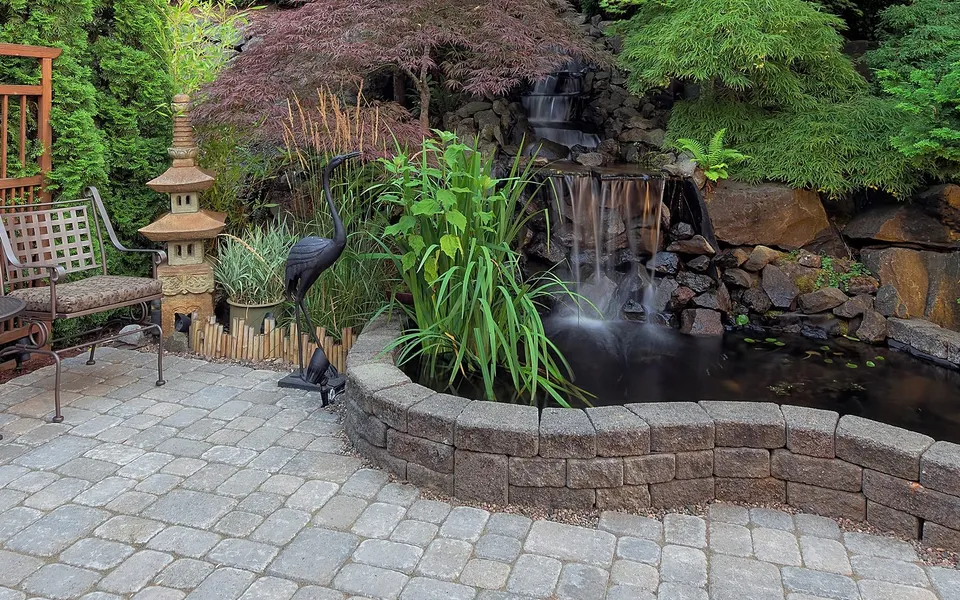
This is the working plant list we design from — not a catalog of everything that can technically survive Zone 10a, but the species we’ve installed across Pinellas County and still see thriving on drive-bys years later. It’s organized the way real yards present problems: by condition.
Full brutal sun (south/west exposures, no canopy)
The heat-strip survivors. Muhly grass for drifts of fall pink; firebush for hummingbirds and near-year-round bloom; blanket flower and beach sunflower as self-seeding color; saw palmetto (get the silver form) for permanent structure; dwarf bougainvillea where you want maximum color per gallon of water. Spacing discipline matters most here — full sun plants grow to their tags fast.
Deep shade (under oak canopy)
Turf loses; layers win. Coontie is the backbone — native cycad, tidy, nearly immortal. Around it: holly fern and macho fern for texture, caladiums and bromeliads for color, peacock ginger as a shade groundcover that reads tropical, Asiatic jasmine where you need a lawn-replacement mat. Under oaks, plant in pockets between structural roots rather than tilling beds.
Salt zone (beachside, Intracoastal, bayou lots)
Within spray distance, the list narrows and gets sculptural: sea grapes (hedge or tree-form), clusia for fast dense screening, silver buttonwood, saw palmetto again, cabbage palm and coconut-look alternatives like Christmas palm on the milder blocks. Stage tenderer plants behind the salt-tough perimeter — the first fifteen feet do the fighting.
Wet feet (low spots, swale edges, pond margins)
Where summer water sits: blue flag iris, spider lily, cordgrass, fakahatchee grass, and buttonbush if there’s room. A soggy corner replanted as a rain garden stops being a mud problem and starts being the most interesting bed on the property.
The three mistakes that kill Florida-friendly yards
- Irrigating like it’s turf. Established drought-tolerant beds want deep, rare water. Daily lawn zones rot them — separate the zones or convert beds to drip.
- Planting the tag photo, not the mature size. A firebush is a five-foot shrub renting a one-gallon pot. Space for year three or spend year three cutting.
- Mulch volcanoes. Two to three inches, pulled back from trunks. Mounded mulch against a stem is a slow-motion girdling.
Get the list matched to your actual yard
A plant guide can’t see your shade pattern or your irrigation zones — a designer walking the property can. Our landscape design consultations are free, and yard-specific beats general every time.
Quick answers
What does 'Florida-friendly' actually mean? +
It's a real standard — the Florida-Friendly Landscaping™ program from UF/IFAS — built on nine principles: right plant right place, efficient watering, sensible fertilizing, mulch, wildlife value, responsible pest management, recycling yard waste, stormwater management, and waterfront protection. In practice: plants that thrive here without heroic intervention.
Are Florida-friendly plants all natives? +
No. Natives anchor the list, but well-behaved non-natives — bougainvillea, many crotons, non-invasive palms — qualify when they suit the site and don't escape cultivation. What never qualifies: invasive species and plants that only survive on constant irrigation and spray.
When should I plant in Pinellas County? +
Fall through early spring is ideal — roots establish in mild weather before the summer stress test. Summer planting works too but demands attentive watering. The month to avoid planting anything tender: right before a January cold snap.